
Why Play Matters: The Secret to Raising Competent, Confident Kids
From educational apps for toddlers to overscheduled enrichments, the pressure to optimize our children’s learning starts early. As academics increasingly compromise early child development and universal preschool gains traction, what real learning looks like for preschoolers matters more than ever.
The pushdown of academics has created a sooner-is-smarter mentality with an overwhelming emphasis on concrete skills, such as letters, sounds, and numbers. But how does this early focus play out in the later years? Research shows that any academic gains achieved in kindergarten by optimizing concrete skills are lost by third grade and reversed by sixth grade. In other words, academic preschool experiences, as opposed to play-based, led to poorer long-term school performance. It’s time to recognize that our current obsession with sooner-is-smarter is driven by culture, not science, and doesn’t hold up long term.
So if worksheets and screens aren’t the most effective way for young children to learn, what is? It is PLAY. This isn’t really a surprise, though. A century of child development research, reinforced by modern neuroscience, consistently confirms how young children learn. When we prioritize and value play, we unlock the key to long-term success.
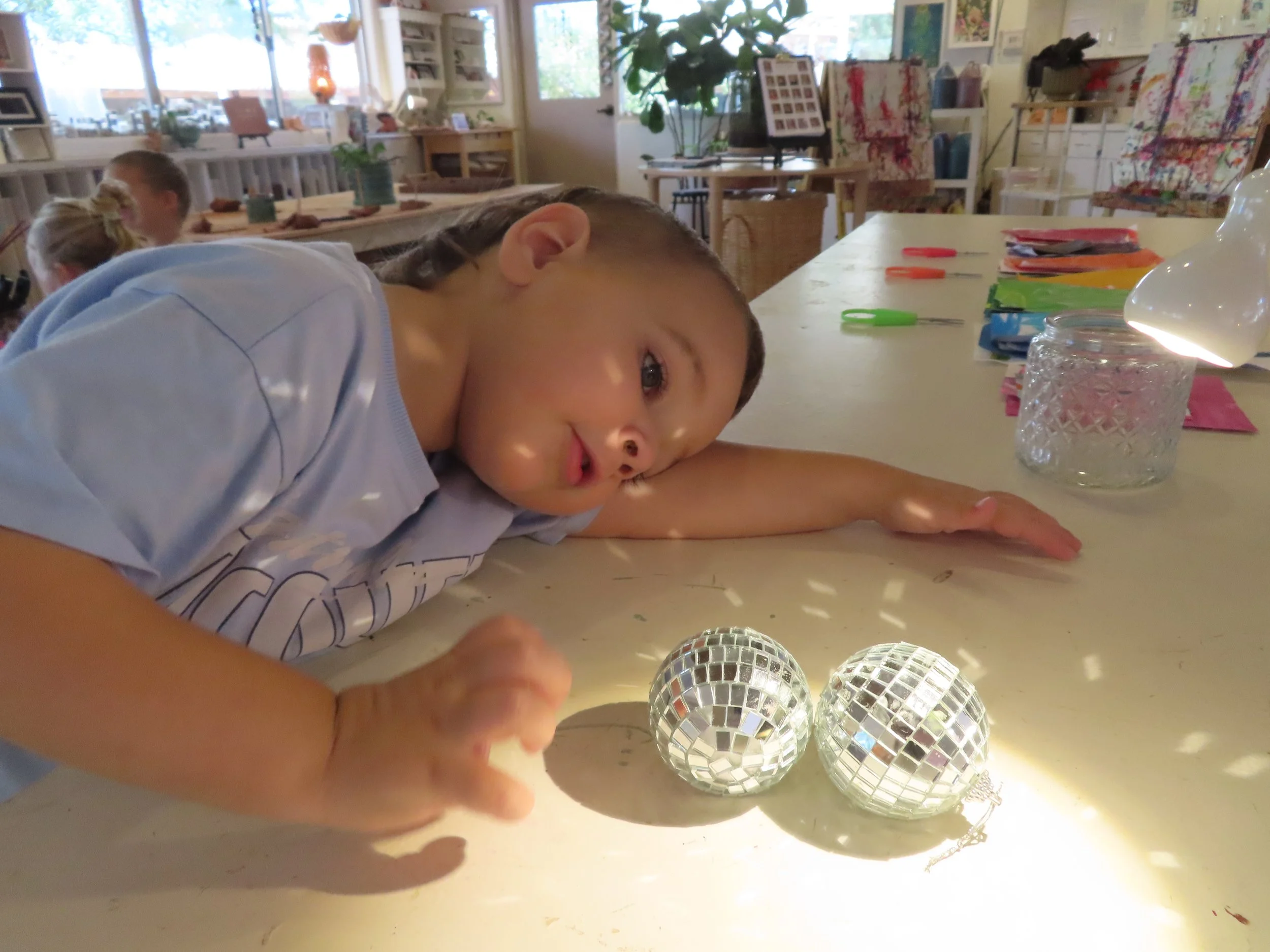
Language is the Driver of Cognition. Research suggests that language and executive function skills in early childhood best predict future learning, not reading and math skills, which often rely on rote memorization and short-term memory. Language serves as a cognitive architect that supports executive function and self-regulation. It builds the oral and cognitive foundation for reading comprehension, writing, and the critical reasoning necessary for math and science. Play is child-centered, and its social foundations encourage interaction. Unlike direct instruction - where the adult voice dominates - play values and amplifies the voices of children. There is time to ask questions, explain theories, and negotiate ideas. In play, children dive into imagination, create endless possibilities, and discover that learning is fun, engaging, and purposeful.
Play Activates the Prefrontal Cortex. This area of the brain supports executive functions like planning, regulating emotions, problem-solving, and decision-making. Through intrinsic, unstructured play, children experiment with cause and effect, learn how to adapt when things don’t go as planned, and discover how to collaborate with others. This might look like stabilizing a block tower, playing “house” in the dramatic play area, or mixing the exact shade of blue needed for the sky. This hands-on engagement and inquiry lead to dynamic learning, which builds neural pathways in the brain that screens or rote memorization simply cannot replicate.
In play, learning shifts from isolated academic knowledge to more meaningful, durable capability. Play is intrinsically motivated. It provides a safe, low-stakes environment for children to struggle and try again. Confidence is born from competence - from the actual doing. Play cultivates resourcefulness and capability, making it the ultimate preparation for real-life skills. When children troubleshoot the challenges of a collapsing block tower, they learn more than physics, mathematical thinking, and engineering. They learn that they can persist through struggle and find more than one solution to a problem. Skills are domain-bound; being a good reader won't make you confident in math. But dispositions are universal - building perseverance in one area unlocks competence in others.
“Confidence isn’t removing all doubt. Confidence is knowing you’ll be all right if things go wrong.” -Mark Manson
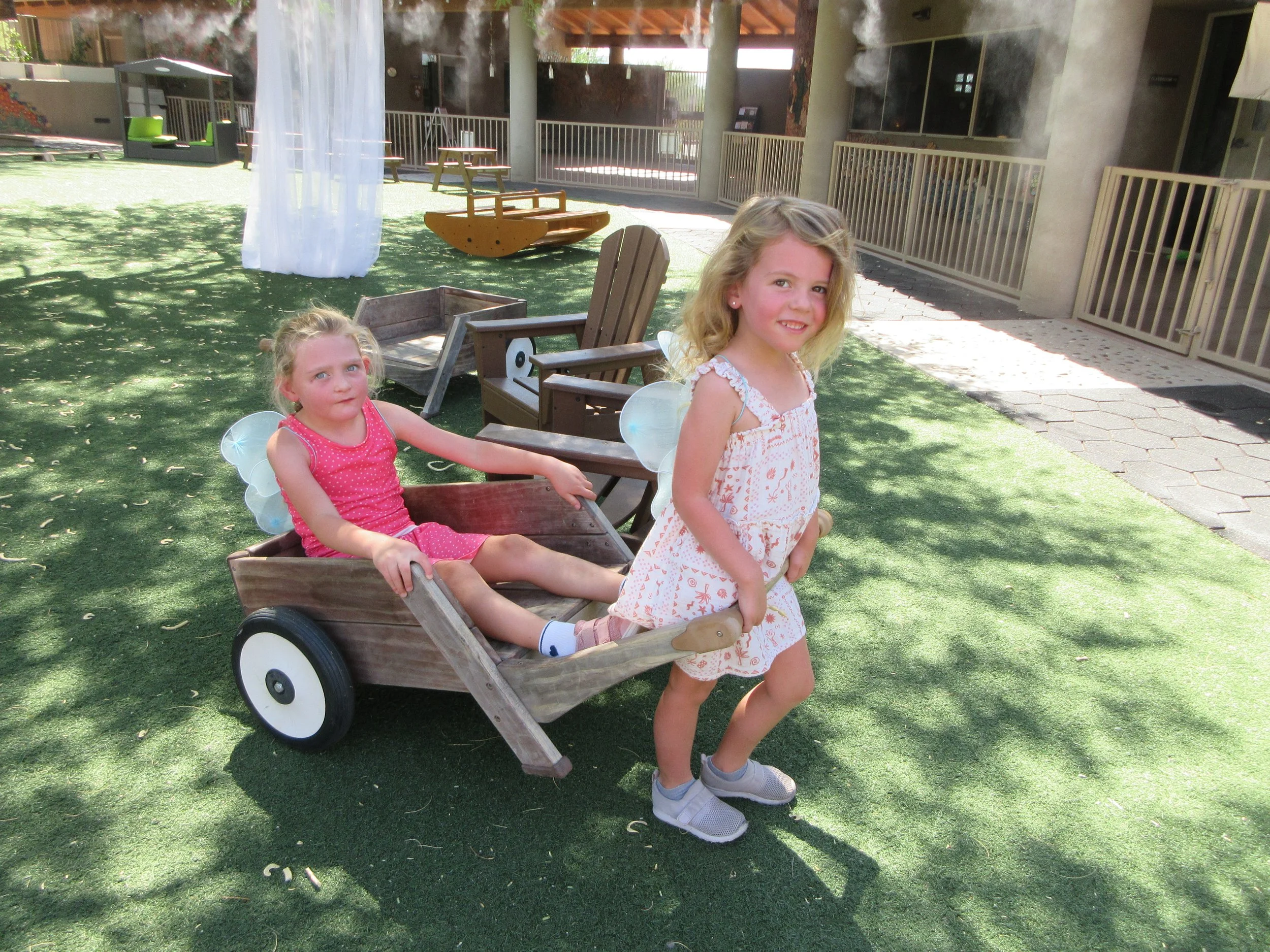
Active Bodies, Active Minds. The pushdown of academics to optimize learning has led children to more sedentary lifestyles, often while looking at screens. This type of learning is controlled and sterile, with children sitting in seats being told to stop fidgeting. Occupational therapists are in high demand to address vestibular and proprioceptive sensory systems disrupted by the lack of physical activity. One in twelve children today cannot meet the average core strength of children from the 1980s. Nearsightedness, or myopia, is on the rise for children, with a leading cause being the amount of time spent indoors, again often while looking at screens. Movement boosts blood flow and brain chemicals supporting memory, focus, and problem-solving. It organizes neural networks and activates cognitive processing. Movement is essential for learning and development.
Sitting quietly for direct instruction of concrete skills isn’t how real knowledge is constructed - and it can actually impede learning. So take the pressure off, resist the sooner-is-smarter mentality, and embrace play. Unstructured, high-quality play provides the perfect foundation in early childhood for future success in school and life.