
"Being curious and excited can take you far, especially over the long arc of a life. The person who is a voracious lifelong learner will figure it out eventually. A strong reader with a healthy dose of curiosity and a willingness to try things is hard to stop." -James Clear
Learning to read often focuses on phonics, connecting spoken sounds to their written letter symbols, which helps children decode words by sounding them out. But raising readers starts well before decoding words is introduced in Kindergarten and first grade. Building an intentional habit of reading, for entertainment, curiosity, or the joy of it, starts with storytelling and a family culture that promotes and protects reading.
What Counts as Reading
“Children are made readers on the laps of their parents.” -Emilie Buchwald
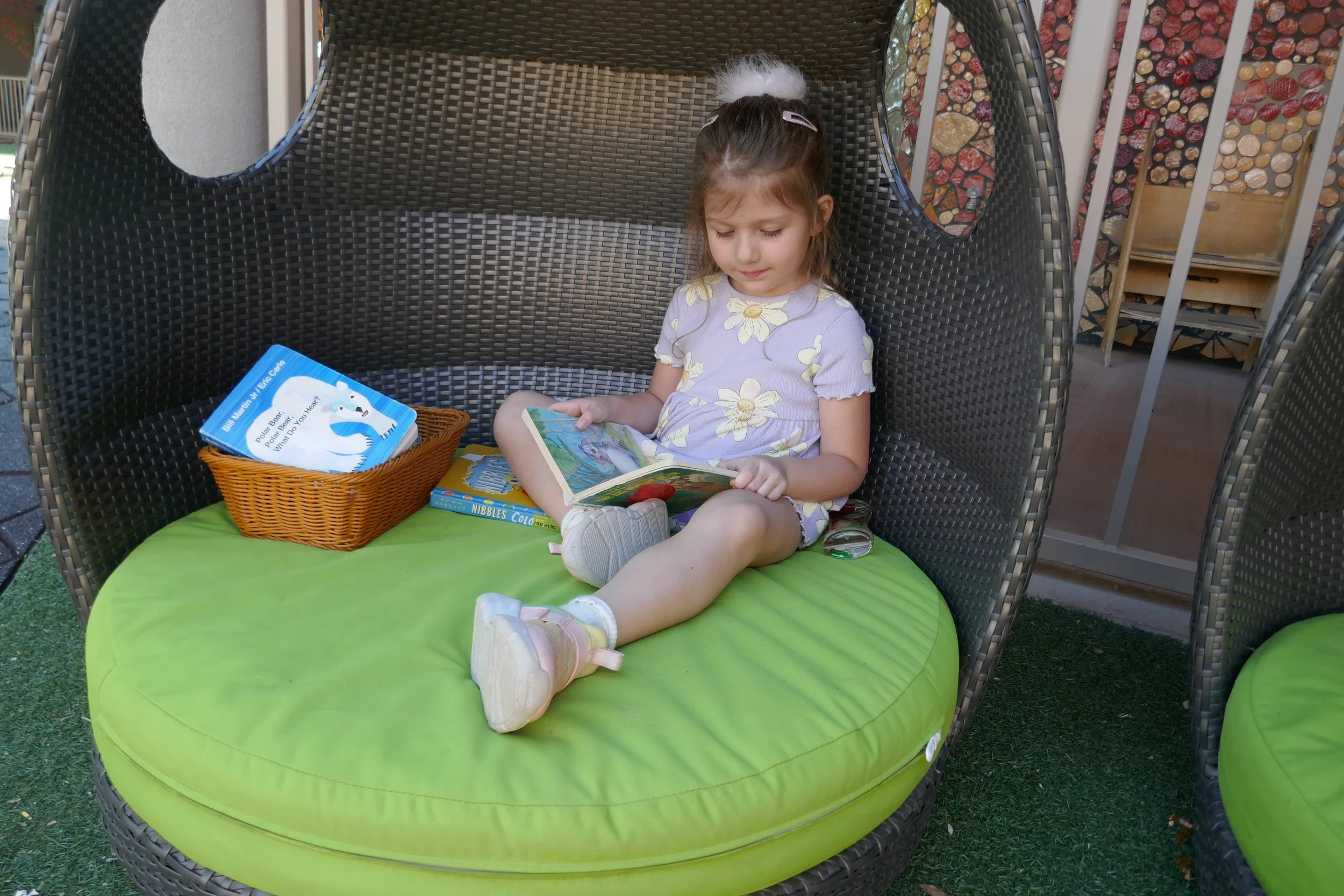
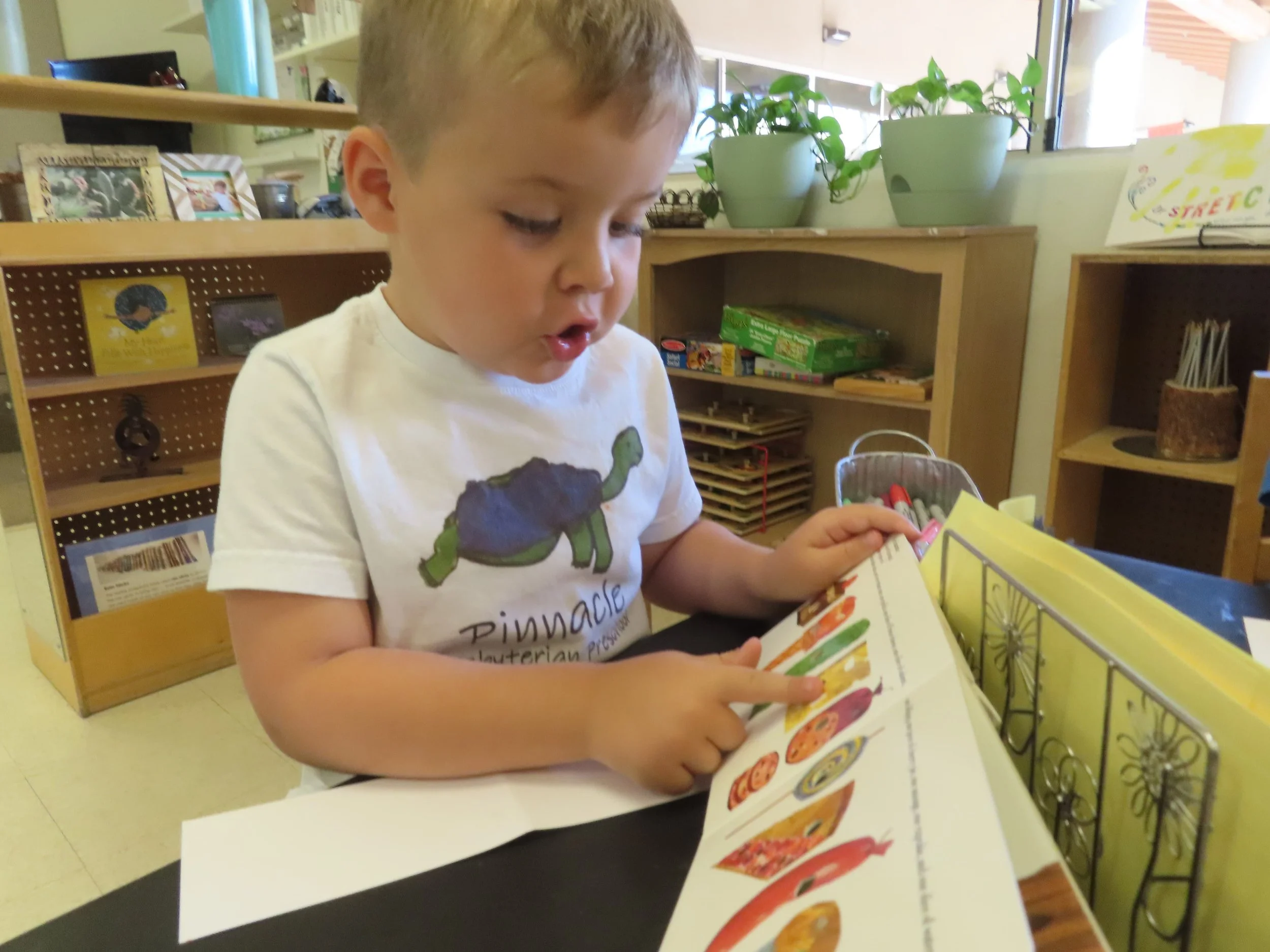
Read-alouds with an adult are a cherished way to cultivate a reading culture at home, blending connection with literacy. But it’s not the only way to encourage a love of reading. Early childhood reading can take many forms, and each has its own value. This may be a child looking through a picture book independently, focused on the illustrations and creating their own story. Sometimes it is a beloved story told from memory; other times, it’s a completely new story imagined through illustrations alone.
It might be a kids’ cookbook, a magazine like Highlights Jr. or Ranger Rick, or a nonfiction book on a topic of interest. Nonfiction books are a treasure for young children's endless curiosity. Instead of immediately turning to Google or an AI assistant for answers, have them dive into an old-school kids' encyclopedia or nonfiction text so they can stumble upon more questions along the way.
Graphic novels are a great bridge for readers to create their own stories or begin noticing the print on the page. Audiobooks definitely count as reading too! Vox books (available at our public library) even have a remote control inside the cover that lets children listen independently and signals when to turn the page. Screen-free technology, such as a Tonie box or Yoto, lets children listen to stories while doing other tasks, like building a structure or coloring.
Music lays the foundation for reading. Through songs and rhymes, children build phonological awareness, a precursor to phonics, as they manipulate sounds and clap rhythms. Storytelling counts as reading too. It’s a foundational part of developing a love of reading, even without books. Loose parts, art, story stones, and other open-ended materials naturally lend themselves to storytelling, which supports children’s imagination, creativity, and emerging comprehension.
“The goal isn’t just to raise kids who can read. It’s to raise kids who want to.” -Susie Allison, Busy Toddler
Easy Access Habits
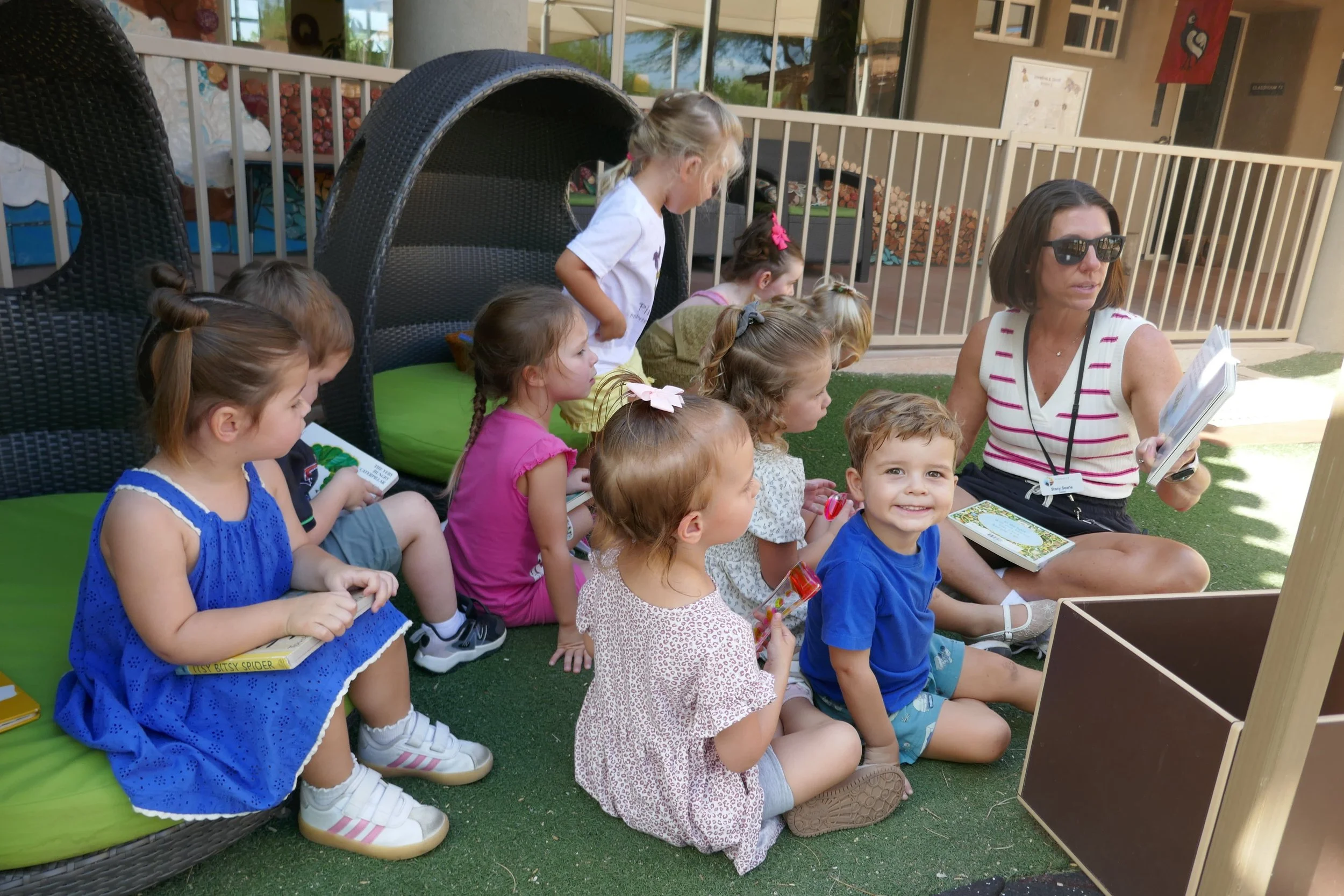
A love of reading comes from easy access to books. It’s not simple; it takes intention. This looks like reading at any stage: soft sensory books with high-contrast visuals for babies; sturdy board books for the toddler years; and high-quality picture books for preschoolers. It also looks like reading in every space: a few books that stay in the car so they are always an option; a kid magazine at the breakfast table that sparks conversation; a reminder to bring a book with you on the way out the door, whether it’s for errands, a restaurant, or a sleepover at the grandparents'. When books are easy to access, they become the default, reducing the friction that keeps children from reading.
Despite our best intentions, we sometimes inadvertently teach children that reading is separate from the fun stuff, like screen time. Routines also help reduce friction around reading. Independent reading or read-alouds make a great transition from school to home and a way to wind down before bedtime. Reading before bedtime, especially when accessorized with a flashlight or headlamp, is a fun way for children to skirt bedtime. It feels mischievous and grown-up, but it's actually building a great habit!
The public library is an incredible (and free!) resource for raising readers. This too can look different depending on what works for your family. Library visits can be an event in themselves, like family storytime read-alouds. It can also look like requesting books online for drive-thru pickup when life gets busy. It might be a weekly routine: a quick 15-minute library visit where children choose their own books. Often, the sheer joy of selecting multiple books is a treat in itself! The Scottsdale Public Library offers a program called Book Mates Jr., where you can share your children’s interests and receive a bundle of curated books. This is an amazing way to find new favorite books, and it's available for picture books, chapter books, and nonfiction.
“The children who thrive as readers share two key characteristics: they’re actively engaged with their reading from the earliest ages, and reading has been ritualized as a cherished family habit.” -Jessica Ewing, Literati
Where Deep Attention Flourishes
“Reading isn’t natural. Unlike speaking, which humans develop organically, reading is an acquired skill that literally rewires the brain… Our brains must coordinate visual processing, language comprehension, memory systems, and abstract thinking - all in milliseconds. This doesn’t happen automatically. It’s built through practice, repetition, and deep reading circuits… Children who become strong readers develop these circuits through thousands of hours of focused attention on text… They require sustained, focused attention to develop properly.” -Jessica Ewing, Literati
Recently, a popular podcast featured an episode on teaching 3-year-olds to read, celebrating an educational app that uses phonic instruction and the same cutting-edge motivation techniques as slot machines. I couldn’t help but wonder: Have we completely lost the point?
“Today’s digital experiences are built on what tech insiders call persuasive design - interfaces deliberately crafted to maximize time on screen through intermittent variable rewards… They’re the result of millions of dollars in research into human psychology and memory, designed specifically to capture (and fragment) attention.” -Jessica Ewing, Literati
Learning how to read and learning why to read are very different. Children must learn the joy of reading before they learn the mechanics, so they persevere through challenges and engage in the repetitive practice that builds strong readers. The seeds of reading are planted long before phonics is introduced. These reading habits create intentional spaces where deep attention can flourish. Rushing children toward phonics, especially in ways that fragment attention, undermines the very readers we are raising, reducing the grand world of storytelling and imagination to decoding. Raising strong readers requires consistency and intentionality in creating spaces that encourage reading while protecting against outside forces that compete for our attention. This is how we share the lifelong love of reading with our children.
Resources: Jessica Ewing, CEO of Literati, on How to Raise a Reader in an Age of Digital Distraction