
Spatial Skills & Social Cues: Developmental Differences Between Boys and Girls
Child development outlines the predictable course a child follows. However, every child walks their own unique path along this course. Many factors will impact an individual child’s development. Brain research suggests that gender plays an important role, and there are key differences in how boy and girl brains typically develop.
Two-thirds of learning disability diagnoses are for boys. They also lead in brain-related learning disorders, such as ADHD. Ninety percent of discipline referrals are for boys. Males make up 80% of high school dropouts and less than 40% of college students. Why? Research into gender and education suggests a serious misalignment between how boys’ and girls’ brains learn and our current educational system.
Children naturally gravitate towards activities the brain deems pleasurable. Understanding where the brain naturally gravitates encourages parents and educators to value where a child is at while also strengthening areas for growth. What is rewarding to the brain is, on average, strongly impacted by gender. These generalizations reflect what is true for the majority of the data collected, not necessarily for every individual.
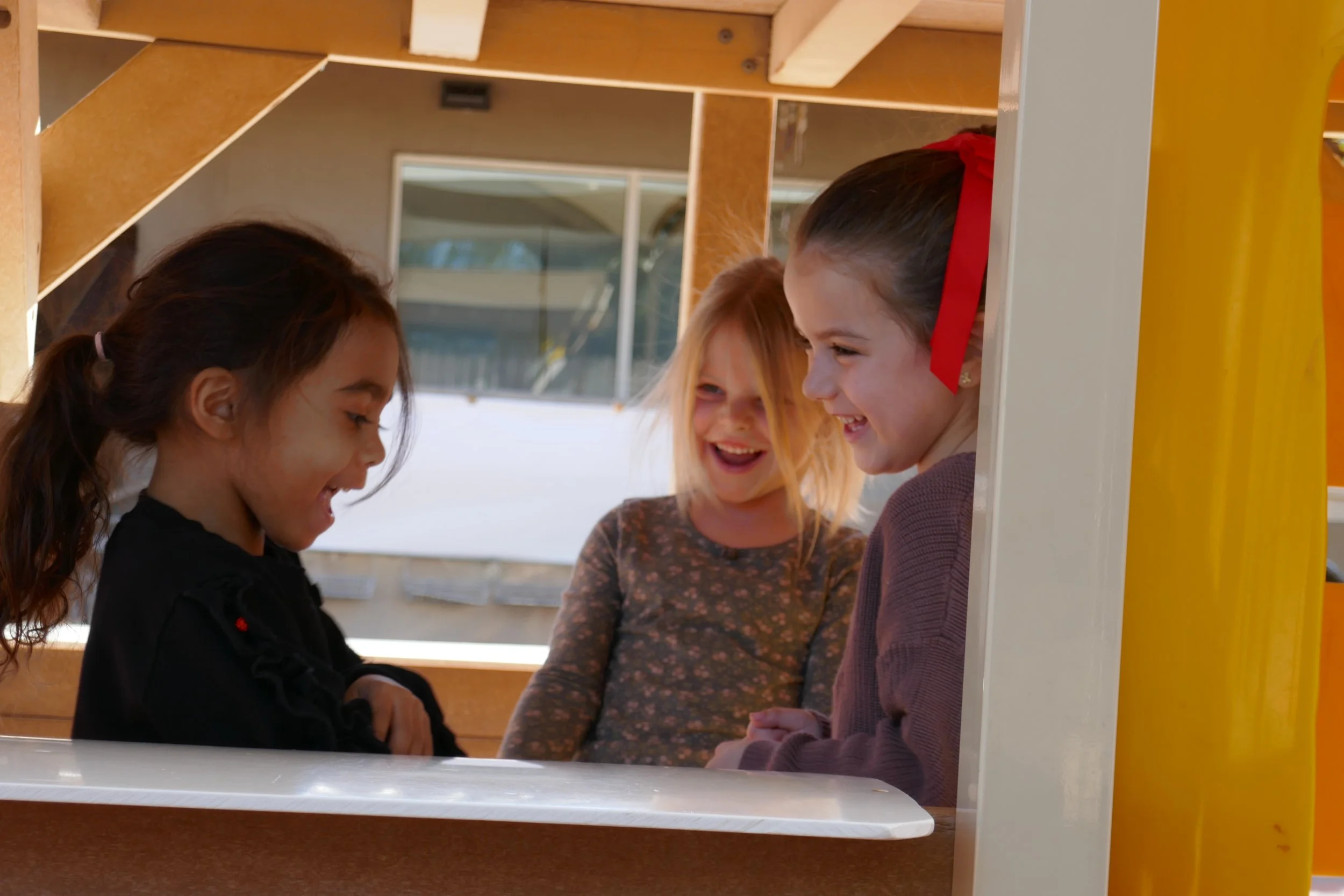
Key Elements of the “Girl” Brain:
The female corpus callosum (aka the bundle of tissues connecting the two hemispheres), on average, is larger than a boy’s, which enables more “cross-talk” between the two sides of the brain.
Girls typically have stronger neural connections in the temporal lobe, allowing for better detailed memory storage, better listening skills, and better discrimination of tones of voice.
Another memory storage area of the brain, the hippocampus, also develops larger in girls, further increasing girls’ advantage in learning, especially in language arts.
The female prefrontal cortex is generally more active and matures earlier.
Girls are more likely to have higher levels of serotonin in their brains. Both of which allow girls to make less impulsive decisions overall.
In general, girls' minds are biologically wired to support memory, sitting still, and listening from an earlier age, which often makes complex learning, such as reading and writing, easier to develop.
Supporting the “Girl” Brain:
Girls benefit from increased opportunities to manipulate objects, build, design, and explore spatial challenges. They can be encouraged and supported as they navigate areas where they are more likely to struggle. Girls should be encouraged to engage in physical games and large-movement activities, as boys tend to be more advanced than girls in gross motor development. Water and sand tables support spatial exploration and science, while puzzles foster perceptual learning. Open-ended manipulatives support math development and building and construction. A variety of building materials, such as large wooden blocks, smaller blocks (Lincoln Logs, magnetic tiles, Kapla blocks, etc.), and natural materials that are less symmetrical and more difficult to balance, are a few examples.
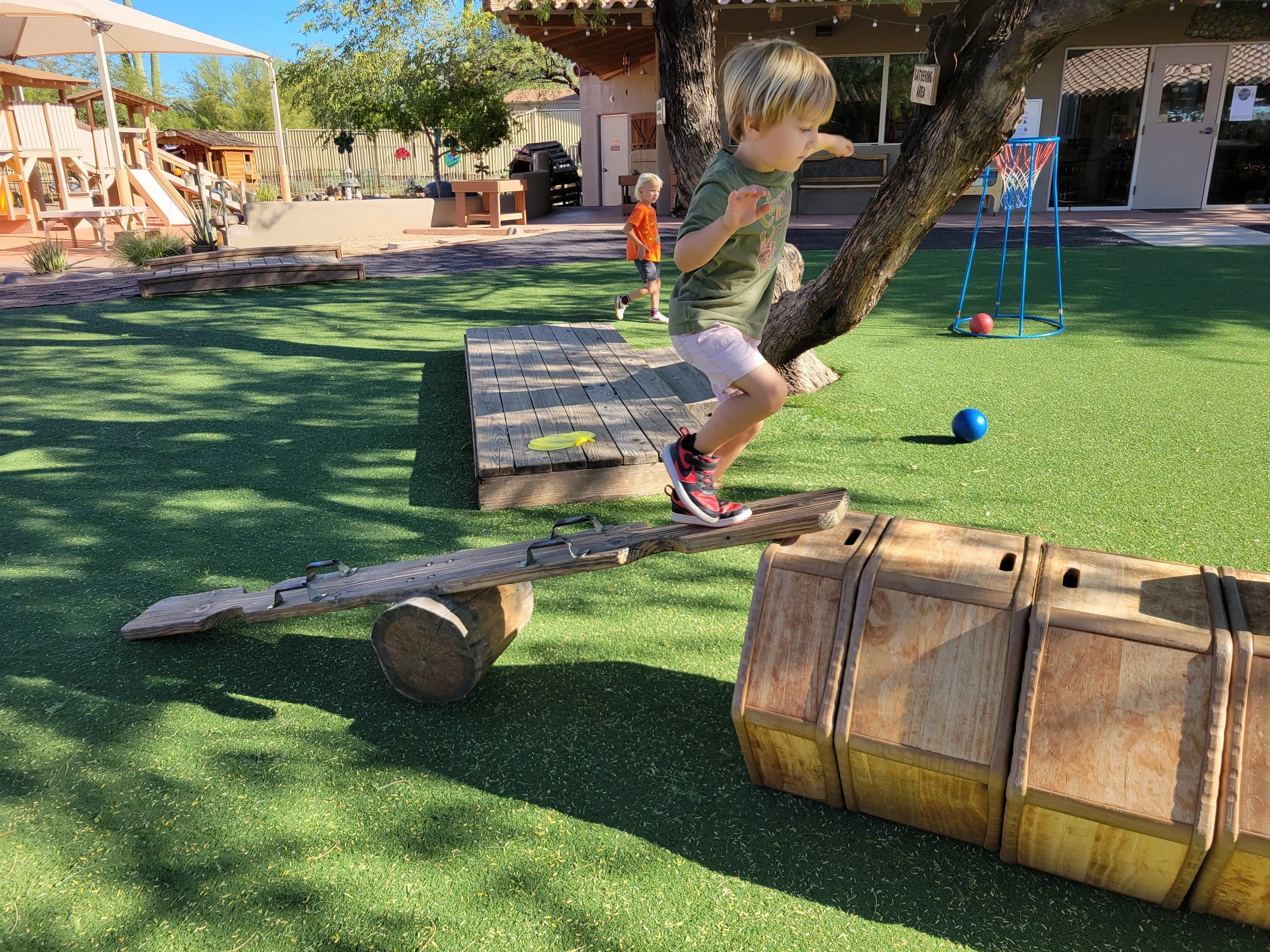
Key Elements of the “Boy” Brain:
Boys are experiential and kinesthetic learners, meaning they construct knowledge using all their senses and with their entire body. Movement helps boys stay focused and supports self-regulation.
The male brain typically has more cortical areas dedicated to spatial-mechanical functioning, leading to a preference for moving objects through space (e.g., balls, airplanes, or the body).
Boys have lower levels of serotonin and oxytocin, the primary human bonding chemical. This can minimize impulse control and the tendency to sit still for long, empathetic chats with friends. In addition, most boys experience words and feelings very differently from how girls do. It also demonstrates why boys are more likely to get in trouble for impulsiveness, fidgeting, and difficulty listening.
Boys tend to lateralize their brain activity. They operate with reduced blood flow, and their brains are structured to compartmentalize learning. As a result, they do not multitask as well as girls, often having more issues with attention span and transitions.
Typically, boys' minds support learning higher math and physics more easily and abstractly.
Supporting the “Boy” Brain:
Greater blood flow to the cerebellum - the “doing” center of the brain - allows boys to more easily verbalize what they are doing versus how they are feeling. For example, asking boys to describe their building in the block area, such as the steps they are taking to create it, will encourage more expansion of verbal skills. They may be more easily focused on the what of their doing than the why. (By contrast, the “girl” brain may more easily gravitate towards imagination and storytelling). Boys benefit from additional opportunities for fine motor development. Games using tweezers, chopsticks, and other items that encourage pincer grasps can provide support. The male brain is designed to “renew, recharge, and reorient” by entering a state of rest. As a result, boys are more likely to zone out when more words are used to communicate. Using visual schedules and instructions that utilize pictures or symbols will be more effective.
Resources: