
Play is the Ultimate Preparation for School (and Life!)
“Children literally thrive by challenging their bodies… In order to reverse the growing trend of children who have trouble with strength, balance, and coordination, we need to first understand the underlying motor and sensory skills that support and develop healthy, strong, and capable children.” -Angela J. Hanscom, Balanced and Barefoot: How Unrestricted Outdoor Play Makes for Strong, Confident, and Capable Children.
Children learn through play. It’s as simple and complicated as that. Play is perfectly designed from infancy to support every aspect of a child's development and thriving. As adults, it’s important to minimize external forces that prevent play while respecting its value by providing the time, space, and tools necessary (see suggestions below).
The landscape of modern-day parenting looks different in many ways from previous generations. Safety concerns keep children in almost constant eyesight of an adult, often leading to increased time indoors, either being entertained by an adult or by a screen. Play does not need to be an intricate adult production. In fact, research suggests it should not, as there is immense value in honoring play as the child’s domain.
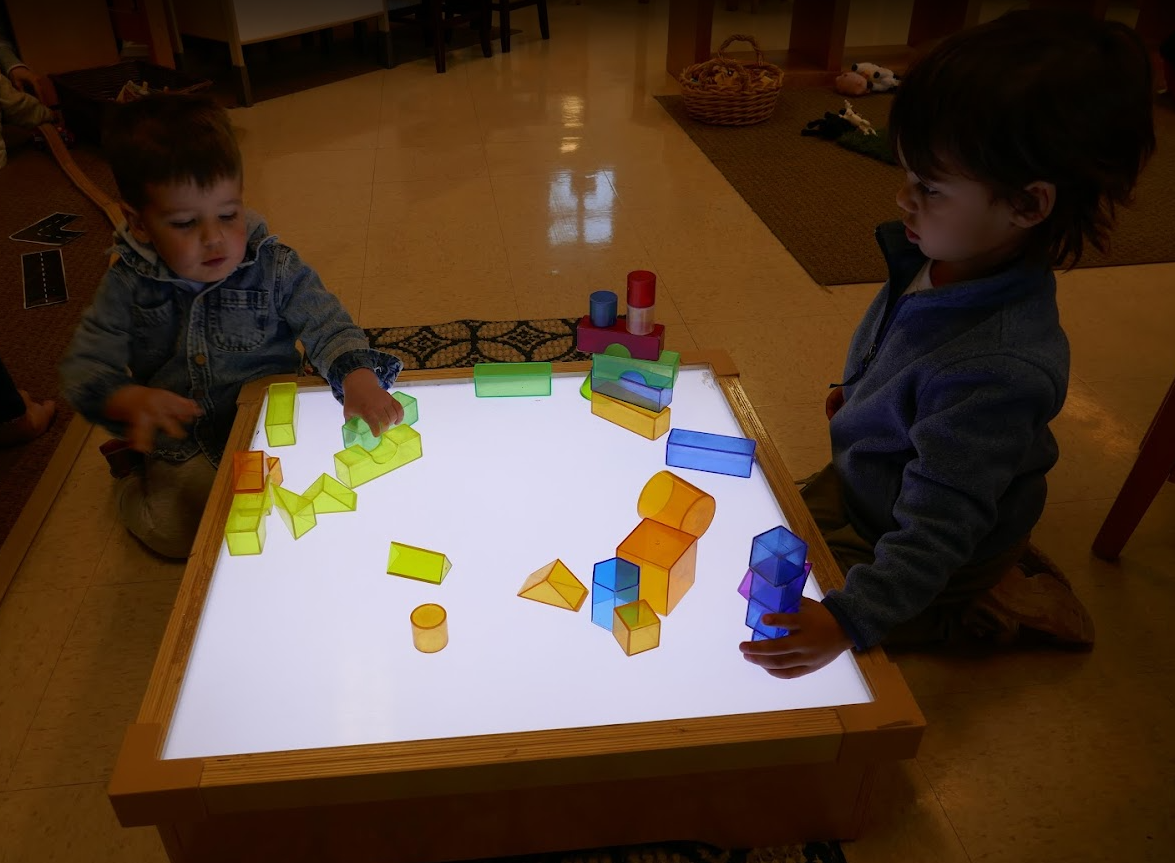
Children move from nonsocial to social play in six main stages: Unoccupied, Solitary, Onlooker, Parallel, Associative, and Cooperative.
Nonsocial Play:
Unoccupied (0-3 months) Play begins the moment babies are born. Early play involves the body itself, with seemingly random, erratic movements and keen observation. As infants try out different movements to see what the result will be and gather information from what they see, hear, and feel, they are learning to process sensory input for their surroundings.
Solitary (3 months - 2 years) Play is intentional and focused, but does not engage with others. Examples might be stacking blocks, dropping items repeatedly, shaking a rattle, or banging objects together. Older toddlers may look at a book, sing to themselves while playing with a stuffed animal, or draw alone. This foundational phase is characterized by the ability to entertain yourself, to focus on a self-determined interest for increasing periods of time, and to make discoveries about cause and effect.
Onlooker (2 - 3 years) When a child watches others play without joining, it’s called onlooker play, an important transitional stage between nonsocial and social play. Children learn social norms, such as sharing and taking turns, through observation and absorb new vocabulary by listening.
Supporting Nonsocial Play:
Freedom of Movement - Limiting time in “containers” (swings, bouncers, etc) allows children to build muscle strength and coordination while also developing body awareness (vestibular sense). Tummy time develops the neck, back, shoulder, and core muscles.
Functional play - What happens if I do this? Children are learning how things work, often with repetitive actions. A safe and secure “yes” environment offers autonomy and independence without an overwhelming amount of choices.
Engaging Materials- High-quality toys and materials are open-ended and spark curiosity. For young babies, this may include high-contrast visuals and baby-safe mirrors placed on the floor to encourage tummy time, or splashing in an infant bath. Older toddlers can explore sensory bins that encourage scooping and dumping, chunky puzzles, stacking blocks, and board books.
Attachment - Attunement play fosters trust, empathy, and emotional regulation through eye contact, facial expressions, and the serve-and-return of coos, babbles, and gestures.
Social Play:
Parallel (2 - 3 years) Children play alongside others, using the same or similar materials, but without interacting. Social awareness is developed through shared workspaces, respect for personal space, and confidence as they adjust to social settings at their own pace.
Associative (3 - 4 years) Children transition to interacting with one another while sharing materials, but their play is not yet coordinated around a shared goal or activity. This is a foundational phase that supports the development of problem-solving and language skills, as children interact more frequently, take turns, and communicate their ideas.
Cooperative (4+ years) Organized play centered around a shared goal, such as finishing a puzzle, painting a picture together, building a tower, or setting up a play restaurant. This is where playing together becomes true teamwork. In this sixth and final phase, children utilize and expand on the “soft skills” required for Executive Function, such as creating a plan (conflict resolution), controlling impulses (self-regulation), and seeing things from someone else’s perspective (empathy).
As children are pushed into more formal school settings at younger ages, cooperative play is often overlooked and undervalued. However, the development of executive function in the prefrontal cortex at this stage, developed through high-quality play, is precisely the preparation children need to thrive in academic settings.
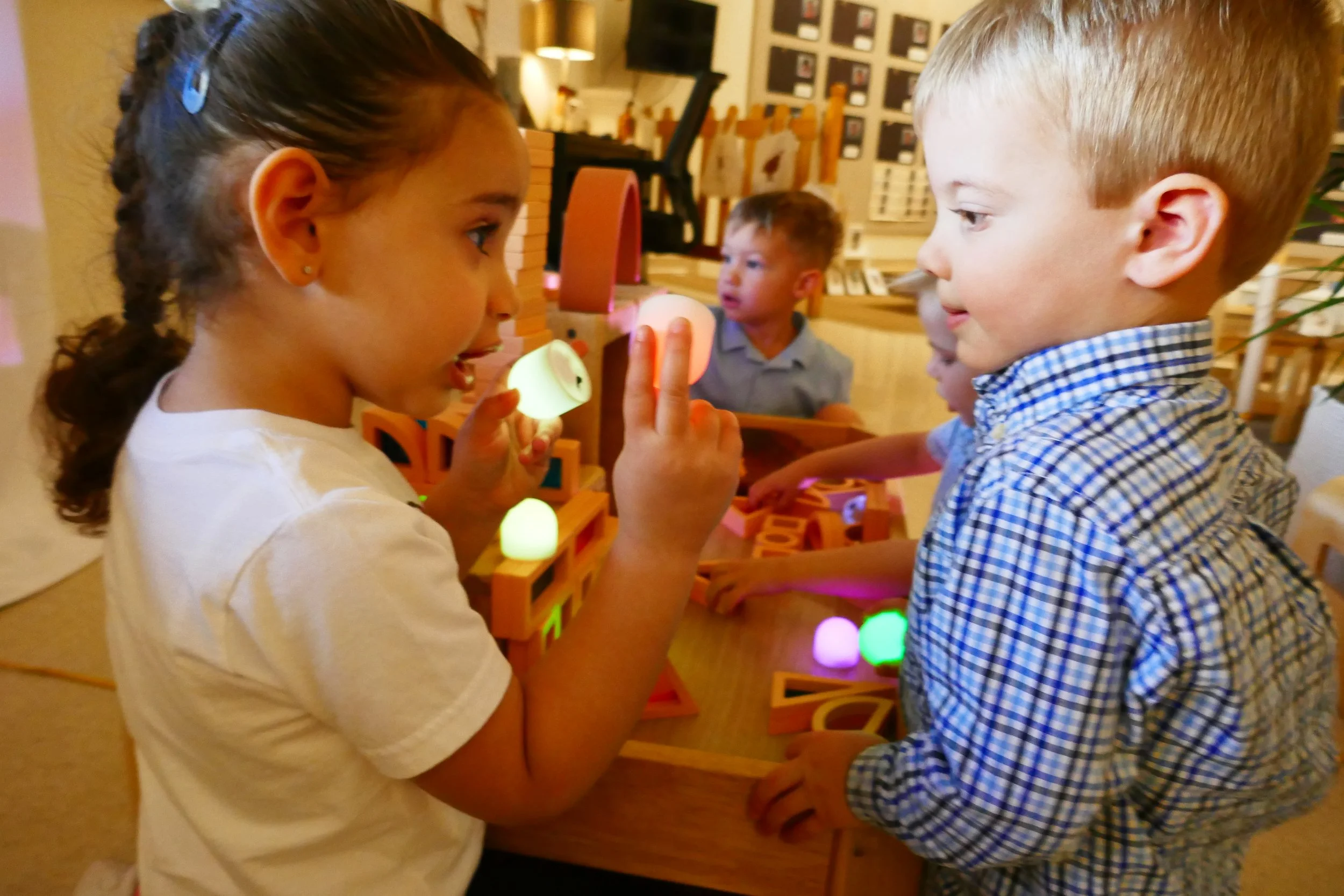
Supporting Social Play:
High-Quality Materials - Look for toys that challenge children, such as puzzles, or open-ended toys, like wooden blocks, that can grow alongside a child. Recycled materials are an excellent (and free!) open-ended resource that provides hours of entertainment and creativity. Keep a selection of containers, lids, and paper rolls available for children to draw on, tape together, or build with.
Symbolic play encourages children to work together and fosters creative thinking. This form of imaginative play allows children to turn objects into whatever they need, such as a block that can transform into a car, a phone, or a sandwich.
Expressive play develops emotional intelligence through a variety of opportunities to think and feel, often through the visual arts. Drawing and mark-making are essential opportunities for children to develop and finesse their perspective and emotions.
Provide Time & Space - Complex play requires time to settle into play and expand on ideas. Purposeful play is not immediate; it often takes children 20-30 minutes to get into a flow. Increased safety concerns have led to more supervised play, with supervision often equated with adult interference. There is immense value to the boredom children experience when trying to figure out what to play. Setting up a play routine at a consistent time of day can help support children’s independence - so can quality play toys (see below!) Intervening too quickly also prevents children from learning how to settle disputes or implement their own solutions.
Suggestions for Toys & Materials:
Almost all of these categories could be their own blog posts, but here are just a few ideas with links for reference. These are simply suggestions to spark inspiration, not a list of must-haves. Some links come from Busy Toddler - a resource for play tools and ideas.
Tummy/ Mat Time (0-2 years)
Building/ Blocks
(0-2 years) Stacking Ring, Soft Blocks, Jelly Blocks, and Mega Bloks
(3-6+ years) Wooden Blocks, Light Blocks, Magnetic Builders, Magnetic Cubes, Magnetic Tiles(add Magnetic Roads), DUPLO, and LEGO.
For babies, the bathtub is the ultimate sensory bin! Set them up in an Infant or Baby bath to splash - these Animals, Cars, and Balls are a great water addition.
A See-Through Table, Sensory Table, Quart Storage Bin, or Under Bed Storage all work great as sensory bins!
Clay is also a sensory favorite - although a shallow sensory bin can be used, a tray or tablecloth also works.
Light Table (3-6+ years)
Puzzles
(0-2 years) Stack & Sort, Knob Puzzles, Chunky Puzzle,
(3-6+ years) Jigsaw Puzzle, Floor Puzzle, Interactive Puzzle, Table Puzzle, and Logic Puzzle (for older preschoolers,Q-bitz Jr)
Books (everywhere!)
(0-2 years) Photo Book, Musical Books, Board Books, and Sensory Books
(3-6+ years) Wordless Books, Rhyming Books, and Interactive Books
Loose Parts (3-6+ years)
Open-Ended Dramatic Play
Mark-Making (3-6+ years)*We’ll share art material suggestions in a future post!