
Wednesday, August 26, 2026
written by Rev. Erik Khoobyarian
A family has just lost someone they love. They’re grieving, perhaps still in shock, when the questions begin:
“What Scripture would you like read?”
“What hymns should we sing?”
“Who should speak?”
“What would your loved one have wanted?”
Too often, the family’s honest answer is, “We don’t know.”
They do their best. They search online, choose something familiar, or try to remember what their loved one might once have mentioned. It isn’t a lack of care. The conversation simply never happened, and perhaps their loved one had never considered the questions either.
We can give our families a different experience.
Planning your funeral while you’re healthy and well isn’t gloomy. It’s an act of love: a chance to consider what you hope your service will say about your life, your faith, and the God who has accompanied you through it all. It also spares those you love from making dozens of decisions while they’re carrying the weight of grief.
It may be one of the final gifts you give them.
More than a summary of a life
At Pinnacle, we often call a funeral or memorial service a Witness to the Resurrection. The name reminds us that the service is about more than recounting the events of someone’s life. We remember, give thanks, grieve honestly, and proclaim the promises of God.
Every life bears witness in its own way. We see it in devotion to family, service to others, courage through hardship, quiet kindness, and questions of faith carried over many years. At a funeral, the community gathers to say: this life mattered, this person was loved, and God was present here.
Planning ahead lets you help tell that story. What do you hope people will remember? What do you hope they’ll carry home with them? Perhaps there’s a passage of Scripture or a hymn that has sustained you and might steady someone you love when the time comes.
You don’t need to plan every moment or leave a rigid set of instructions. A service also needs to care for those who are grieving, and circumstances may change. Your thoughts simply give your family and the church a loving place to begin.
A conversation around the kitchen table
Talking about death can feel uncomfortable. We may worry that raising the subject will frighten our children or make death feel nearer than it is. Yet the conversation doesn’t hasten anything. It acknowledges that our lives are precious, finite, and held in God’s care.
The Rev. Dr. Nancy Duff helped us explore these questions when she visited Pinnacle in January 2025 for a weekend discussing faithful decisions at the end of life. In her book Making Faithful Decisions at the End of Life, she encourages Christians to talk with family, friends, and trusted members of their faith community, allowing their beliefs and values to guide the choices they make. Learn more about Nancy Duff’s book.
You might begin at the kitchen table: “I hope none of this will be needed for a very long time, but I’d like you to know what’s meaningful to me.”
Another funeral can open the door. What touched you? Was there a hymn, story, or prayer that stayed with you? What would you want for your own service?
Your answers can change. Faith grows. Relationships change. A hymn that means little today may become deeply important after carrying you through a difficult season. Revisit your plan every few years, and be sure the people you trust know where to find the current version.
A place of remembrance
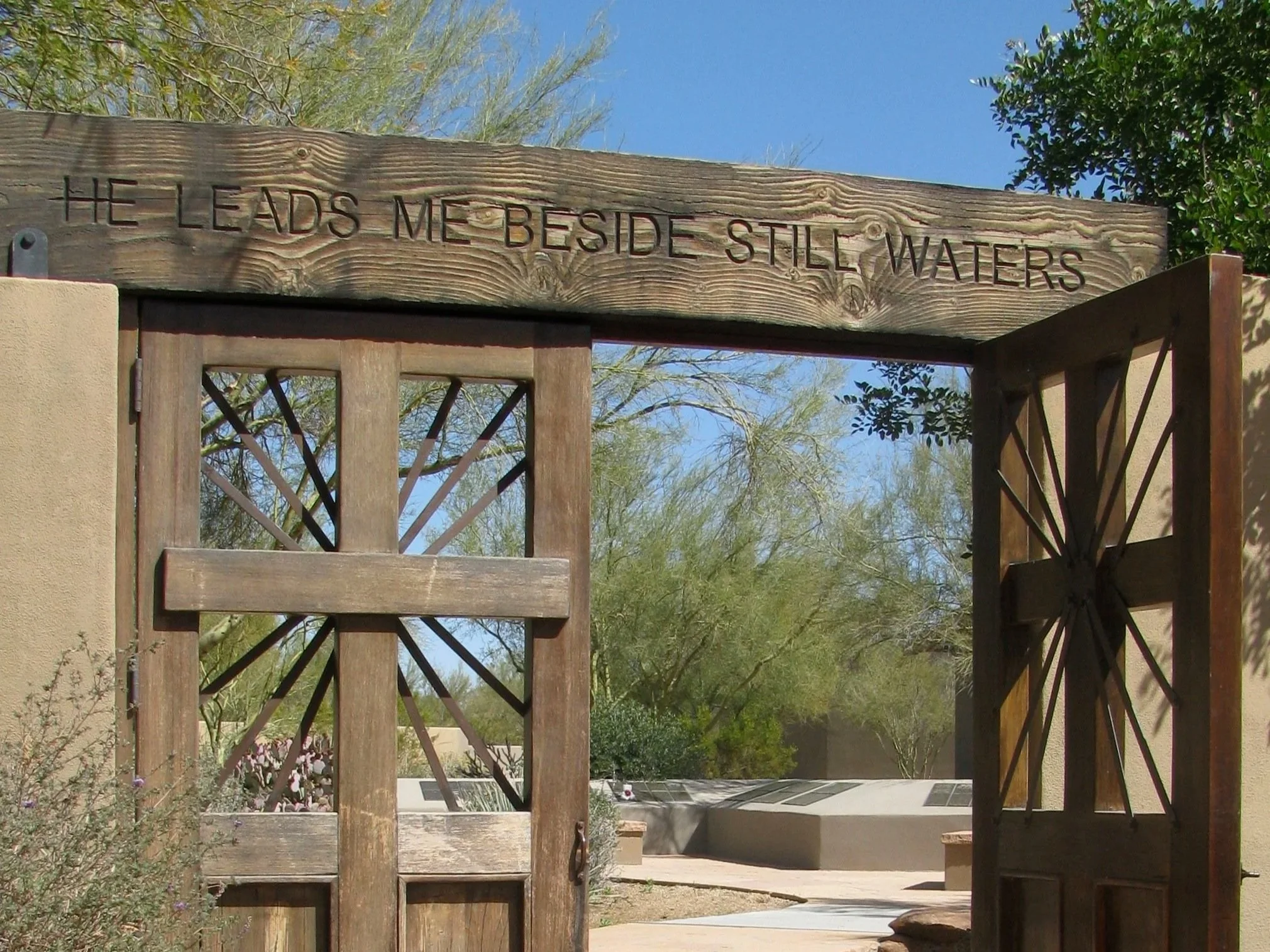
Part of planning is deciding where you’d like your remains to rest or be memorialized. That may be a family cemetery, a veterans cemetery, or another place with personal meaning. We are so blessed at Pinnacle to have a wonderful space set apart for remembrance. You may want to consider the Pinnacle Presbyterian Church Memorial Garden. Above its entrance are words from Psalm 23: “He leads me beside still waters.” The verse speaks gently of God’s care at the end of life and of the comfort we seek for those who remember us. If you’ve never visited the Memorial Garden, I want to encourage you to do so. It is a beautiful part of our campus and a place of both peace and comfort.
Tell the story only you can tell
Planning ahead is also an invitation to look back with gratitude.
Consider beginning your own obituary. You don’t have to write the finished piece, though you certainly may. Start with the facts your family will need: important dates, places, relationships, education, work, military service, church involvement, and community activities.
Then go beyond the résumé. What shaped you? Who changed your life? What are you grateful for? What brought you delight? Where did you struggle, grow, or encounter unexpected grace? What do you hope your children, grandchildren, friends, or church community will carry forward?
Nobody knows your whole story as well as you do. Writing some of it down helps your loved ones represent your life accurately. Better still, it may prompt you to share those stories now, when your family can ask questions, laugh with you, and tell you what the memories mean to them.
This doesn’t have to be only a document for the future. It can become a gift for the present.
A funeral preparation checklist
You don’t need to answer every question at once. Begin with what feels meaningful and let the plan grow over time.
The spirit of the service
What do you hope people will feel as they gather?
What would you like the service to express about your faith?
What themes have shaped your spiritual life: grace, hope, service, forgiveness, wonder, resurrection, or something else?
Is there a story about your life or faith that you especially hope will be shared?
What would you want the people you love to hear one more time?
Scripture and music
Which Scripture passages have comforted, challenged, or guided you?
Is there a biblical story that reflects something of your own journey?
What hymns have accompanied you through important seasons of life?
Is there other sacred music that’s meaningful to you?
Are there particular musical instruments or musicians you’d like included?
Are there prayers, poems, or other readings that have become part of your story?
People and participation
Who might you like to speak or offer a remembrance?
Who might read Scripture or participate in another way?
Are there friends, relatives, or communities that should be notified?
Is there someone who knows a part of your story that others may not know?
Relationships and circumstances change, so consider naming several possibilities rather than placing the responsibility on only one person.
Your life story
What facts should be included in your obituary?
Which relationships, communities, and experiences were most important to you?
What parts of your work, service, or church involvement would you like mentioned?
What accomplishments or turning points helped shape you?
What ordinary joys made your life your own?
What photograph would you prefer for an obituary or service bulletin?
Are there favorite stories, sayings, or memories you hope will be preserved?
Practical wishes
Would you prefer burial or cremation?
Where would you like to be buried, inurned, or memorialized?
Have you made arrangements with a cemetery, memorial garden, or funeral home?
Would you like visitation before the service?
Would you like a graveside or inurnment service?
Would you like a luncheon or reception afterward?
Are there charities or ministries you’d like people to support in your memory?
Are there photographs or meaningful objects you’d like displayed?
Is there anything you definitely would or wouldn’t want included?
Sharing the plan
Who will be responsible for helping carry out your wishes?
Have you talked through the plan with that person?
Does your family know where the written plan is kept?
Has the church received a copy?
Is the plan clearly dated?
When will you review it again?
Let the church walk with you
You don’t have to work through these questions alone. Your pastors and church staff can help you think about the purpose of a Christian funeral, choose meaningful Scripture and music, understand the elements of the service, and record your wishes.
Funeral Planning Workshops
Sundays, Sept. 20 & 27 | 9 am
Chapel Library & Zoom | Both sessions will be recorded
On September 20, I’ll focus on conversations with family and the work to do before planning a service, including brainstorming hymns and Scripture. On September 27, Pastor Mike will explore the elements of the service and help participants begin putting a plan on paper. Click here for event information.
Whether you’re ready to make detailed decisions or simply begin the conversation, we hope you’ll join us.
Planning your funeral is a way of paying attention to life: the people you cherish, the faith that has sustained you, the places that have held you, and the traces of God’s grace woven through your story.
It lets you say to those you love, “When the time comes, I don’t want you to have to guess. Let these words, these songs, and these promises carry you.”
And when they gather, the choices you made may offer exactly what you hoped: comfort, hope, and one final gift of love.