
Lilies of Gaza: Women Artists in Times of War
Wednesday, April 22, 2026
written by Rev. Dr. Mike Hegeman
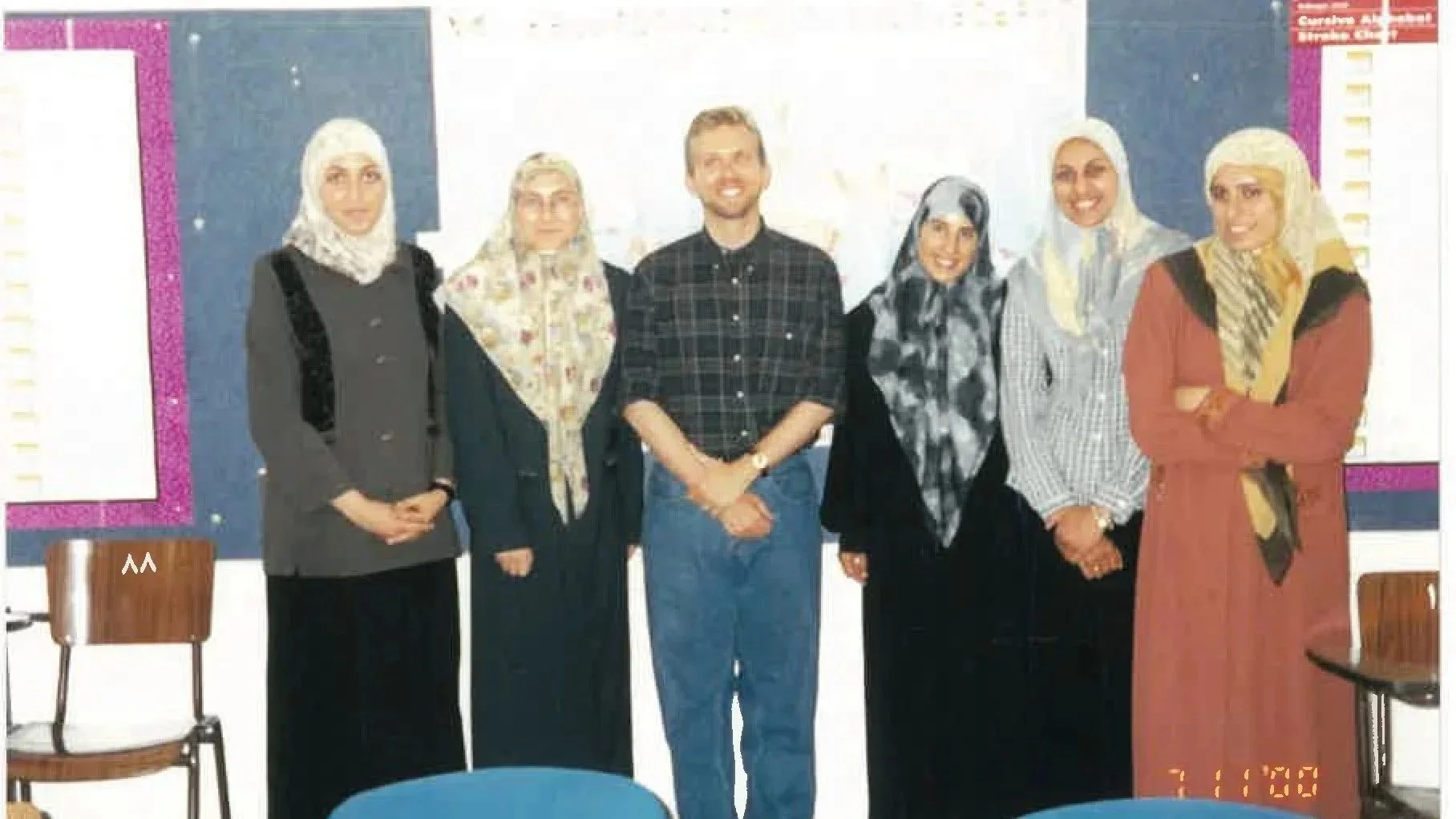
Our new art-wall exhibit here at Pinnacle features the work of female artists from Gaza. When I looked at these pieces of art and read the stories of these artists, it made me think about the time I spent living among Palestinians back in the summer of 2000.
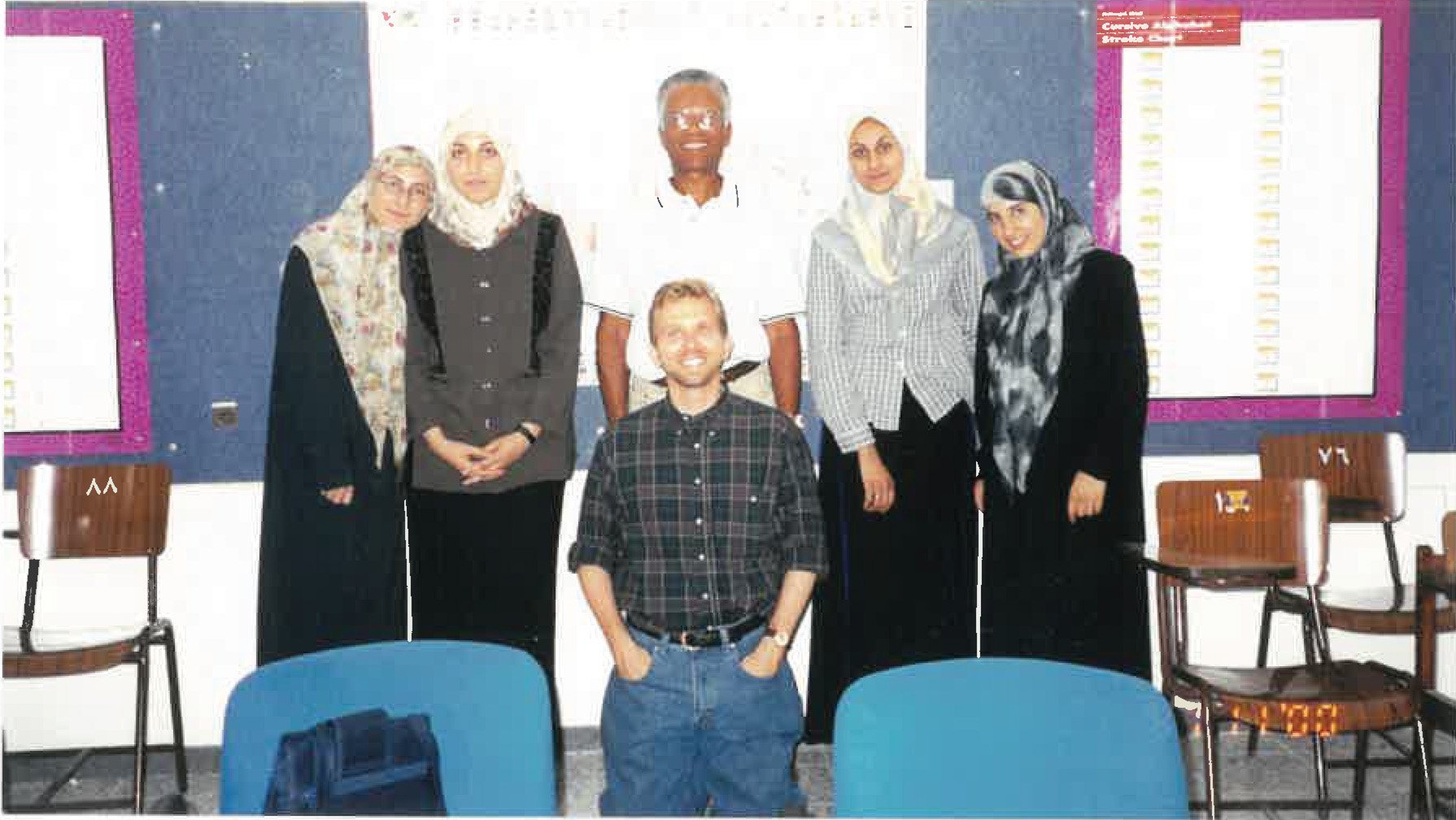
It was twenty-six years ago, when I was studying for my doctoral exams at Princeton Seminary, that I knew that, when these exams were completed, I would want to do something completely different to decompress from the intensity of studying for 10 months for six-hour examinations. So, I called my undergrad university dean, with whom I had gone to China to teach English in the summer of 1987, and asked her, “Do you have any place where I could go this summer to teach English?” She said, “How about Jerusalem?” That sounded really enticing, so I said yes. Where I ended up, though, was not Jerusalem but an out-of-the-way village, half in Israel and half in the occupied West Bank, an hour’s drive north of Jerusalem. The school where I was going to teach was a small college with an all-Palestinian (Israeli Arab) student body. The school was run by Sufis (who are a unique group of Muslims with an ancient history), and the most important thing about this experience was that all of my students that summer were women.
What an experience to have all female students! If there had been male students in the class, the women would have had to sit in the back of the room, behind a four-foot wall. Fortunately, however, there were just these college-age women and me! There was great freedom of thought in the classroom that summer.
Things I learned from these amazing young people: 1) Palestinians have an extremely high education rate among Arab people, 2) my students were passionately feminist (telling me that the Quran gives women rights that their society and culture may not), and 3) they each had aspirations to further their education and the place of all women in their society.
I also learned a lot from these women about the history of the conflict between the historic Palestinian communities and the different waves of outside forces that had shaped them for well over a millennium. At one point, when I asked them why so many Palestinians in that area had blue eyes, they hesitated for an incredulous moment, and then said, “Crusader blood!”, as if I were an uneducated drub for not knowing my history. Although the crusaders had been gone for 800 years, my Palestinian students lived with that history keenly in the present moment. Everywhere they turned, they saw the ghosts of crusaders walking around, leaving and breathing, in their friends and neighbors. I learned much, as well, about what the impact of successive waves of European Jewish refugees coming to Palestine after WWII had meant for these particular Palestinians, with the forced displacement of over 750,000 people from their ancestral lands, at the founding of the Israeli state. [For a balanced account of this history, see The Lemon Tree by Sandy Tolan, 2006.]
When I initially met my class of Palestinian women, the first question they all asked me was, “What do you think of us? What does your media tell you of us?” They were keen to know how they were perceived by the outside world. By the time I left teaching there, after just a few weeks, they wanted me to assure them that I would speak of my experiences among them positively and tell the world of their hopes and dreams, to share with the world their very personal stories of sorrow and hope.
I do think of these young women often, now two and a half decades later, and wonder what has become of them. I wonder if they were able to achieve any of their dreams. We may not have access to these women’s stories, but we have a chance to enter another world of another set of Palestinian women’s lives.
This gathered collection of art (on our art wall) by Palestinian women, specifically women artists of Gaza, speaks to the common experience of women everywhere, who amid the devastation of war seek to lift their voices with “determination, resilience, and wholehearted commitment” to overcome the “overwhelming sense of heartbreak and helplessness” of their situation.
These artists and their images come from the book Lilies of Gaza, which is produced by one of Pinnacle’s mission partners, Dar-al-Kalima University, in Bethlehem, in the Holy Land. This university offers an arts-based education to Palestinian students, both Christians and Muslims, to promote the welfare of those living in conflict zones. Pinnacle works with Bright Stars of Bethlehem, an American organization which supports the work of Dar-al-Kalima, along with its director, the Rev. Dr. Mitri Raheb (an ordained Lutheran minister), who has often visited Pinnacle. I invite you to check out our art wall and enter into the self-expression of these artists who seek to tell their stories through depictions of war-torn urban landscapes, tortured yet resilient souls, and idealized life beyond war, so that not all of who they have been will be lost in the world.
The Rev. Dr. Michael Hegeman, Associate Pastor for Adult Education and Senior Adult Ministry